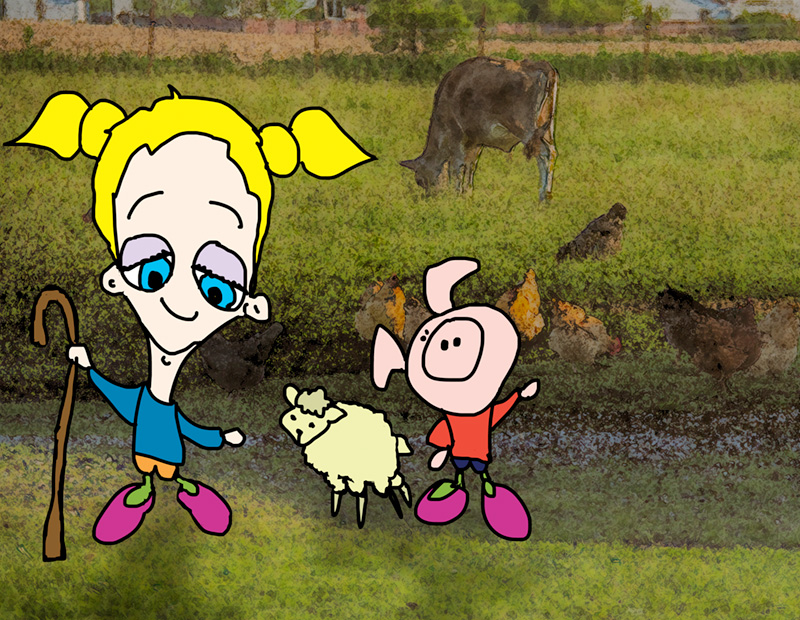
 Well. This is a big day for farmers everywhere. You see… it was on this day… May 24th… in the year 1830…. that the song Mary Had A Little Lamb was published.
It started out… really… as a nursery rhyme. And, little did we know… this fleece who’s white as snow…. was inspired by an actual incident.
Yes, ladies and gentlemen, this poem was based on a true story.
Here’s the deal. Apparently, there was a young girl, Mary Sawyer kept a pet lamb. No spoiler alert here.
Her big brother suggested she take it to school with her. You KNOW how big brothers can be. Always tell you to do things…. which later you will completely regret. Like spreading motor oil all over the basement floor… for slicker roller skating. But I digress.
So… this “thick as a brick” kid named Mary… pulls her lamb to school… kicking and dragging. I mean… humans don’t want to go to school at that age… let alone… little lambs… who’s fleece is white as snow.
And wouldn’t you know it… a commotion naturally ensued. Yep. Like the kids all freaked out up and down… and the teacher threw apples and such…. ANYWAY….
But also on that day… the school had another visitor. This young man’s name was John Roulstone. He was a nephew of the Reverend Lemuel Capen… and to prepare for college… young people often studied with ministers. Lucky for John… his uncle Lemuel WAS a minister.
Oh this goes on. So John thought the whole Little Lamb thing was pretty funny. As a result… the dude rode across the fields on horseback to the little old schoolhouse the next day. And he gave Little Mary Sawyer a slip of paper which had written upon it the three original stanzas of the poem. Several years later, American author Sarah Hale was given credit for finishing the poem.
Two more tidbits about this story. The first. Mary Sawyer’s house, located in Sterling, Massachusetts, was destroyed by arson on August 12, 2007. Now… this indicates to me that perhaps the arsonist has a strong dislike for the nursery rhyme. Probably due to some childhood traumatic experience, with fleece, or snow, or lambs in general.
And the second. The rhyme is also famous for being the very first thing recorded by Thomas Edison on his newly invented phonograph in 1877. AND….It was the first instance of recorded verse. This indicates to me that Edison has a strong liking for the poem, probably due to some terrific childhood experience with fleece, or snow… or lambs in general.
And there you have it. We just never know how are actions might affect others. It may cause one person to become a serial arsonist… and another to become a gifted inventor.
Which then leads to this. Bo Peep… who constantly lost her sheep…. inspired no one. No one at all.
Therefore… always… ALWAYS…. count your chickens. Even if you do it before they are hatched.
Live your beliefs and you can turn the world around. — Henry David Thoreau
We know what we are, but know not what we may be. — William Shakespeare
I dwell in possibility. — Emily Dickinson